Experience multi-room sound planned around your space and tucked out of sight
A thoughtfully designed home deserves an audio experience that feels completely integral to its architecture. In many residences, music lives in scattered places: a wireless speaker sits on the kitchen counter and another waits on a bookshelf, each with its own app and inconsistent volume levels. When guests drift out to the porch on a mild Wilmington evening, the playlist stays behind.
Distributed audio elevates the entire living environment by making sound part of the house itself. One central system feeds discreet speakers in every room you choose, effortlessly managed through bespoke architectural keypads or a single intuitive mobile app. Businesses face a version of the same challenge, where a lively bar and a quiet private office call for very different acoustic environments. Here is how an engineered, multi-zone system brings clarity and harmony to both residential and commercial spaces.
SEE ALSO: Part 3: When Your Smart Home Starts Feeling Effortless
How a Distributed Audio System Fills Every Room
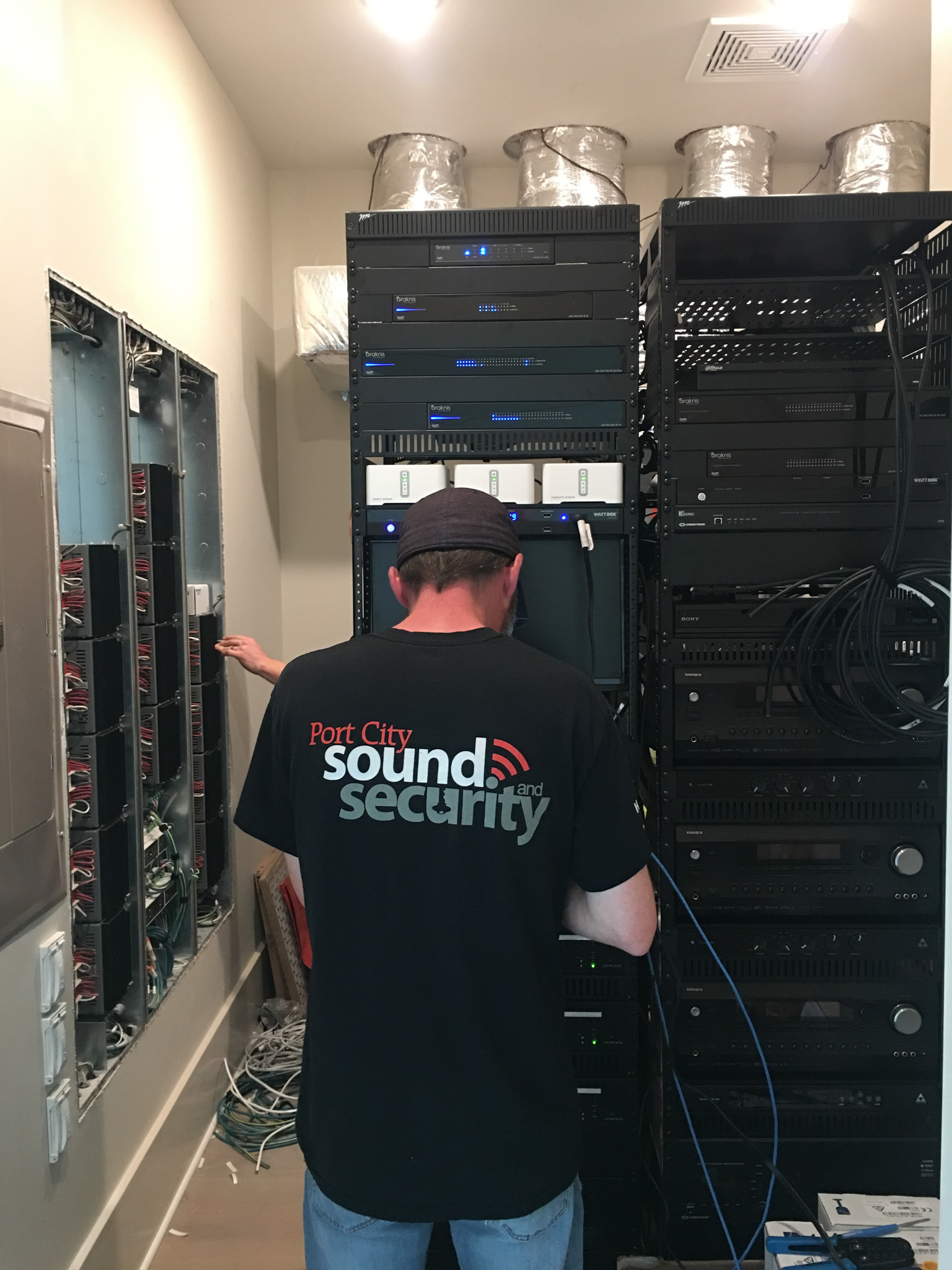
Distributed audio, also called multi-room or whole-home audio, starts with a dedicated equipment rack tucked into a closet or utility room. Your streaming services and a high-fidelity turntable can both feed into that rack, where multichannel amplifiers power the speakers wired to each room. Because the equipment stays in one ventilated space, every living area preserves its clean lines and quiet elegance.
Every room or outdoor area becomes its own independent zone. Soft jazz can play at a low volume in the primary suite while the game room runs something livelier. When friends arrive, one tap groups the downstairs zones so the same curated soundtrack plays everywhere in sync.
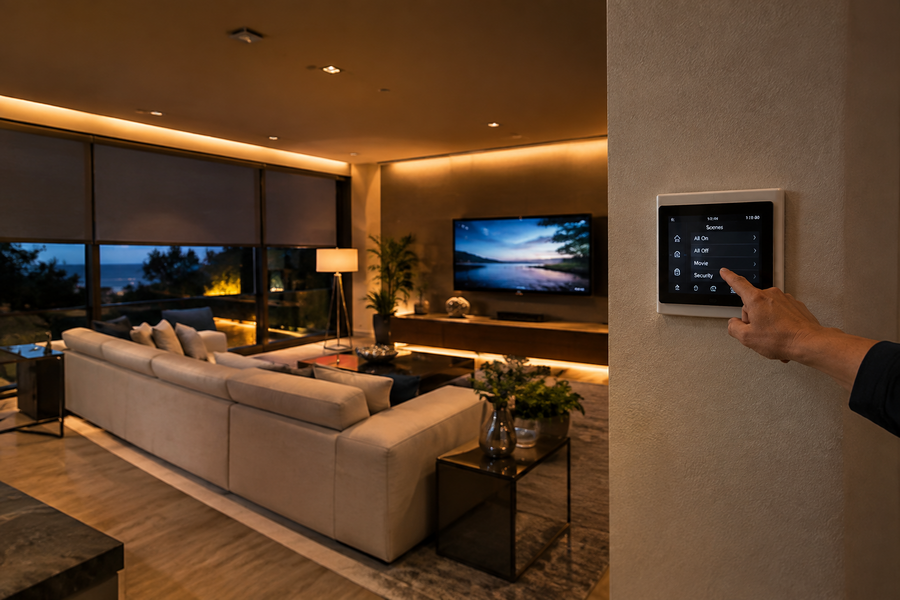
Control lives where it feels natural. A Crestron or Control4 system integrates your music onto custom-engraved wall keypads and a mobile app, right beside your lighting and shades. In an existing home where opening ceilings presents structural limitations, a Sonos Amp can power architectural speakers from a nearby cabinet, keeping wiring runs compact and discreet.
Speakers That Disappear Into Your Interior Design
Every finished room should look the way your designer intended, with the sound simply present. Architectural speakers mount flush in the ceiling or wall, and their slim grilles can be painted to match the surface around them.
For spaces where even a minimalist grille would interrupt architectural sightlines, Sonance Invisible Series speakers are finished over with the same plaster or skim coat as the surrounding wall. The surface looks untouched, and the music still fills the room with pristine clarity. Outdoors, James Loudspeaker’s landscape speakers nestle naturally into planting beds around a pool or patio, directing sound evenly across your private entertaining areas.
Placement matters as much as hardware. Our team maps speaker locations around furniture layouts and ceiling details so every grille lines up cleanly with your recessed lighting. Collaborating with architects and interior designers during design development takes that coordination off your plate and protects the finished aesthetic.
Distributed Audio in Commercial Spaces

Businesses use distributed audio to shape how customers feel in each part of a building. A restaurant can keep upbeat music near the bar while the dining room audio stays at a comfortable conversation level. A retail floor can carry a playlist that suits the brand and never spills into the back office. Scheduled scenes adjust the volume automatically throughout the day, allowing your staff to focus entirely on guest hospitality.
Speech privacy matters just as much in many modern workplaces. In medical offices and open-plan executive workspaces, a sound masking system generates a soft, engineered background sound through discreet ceiling emitters. Nearby conversations become harder to overhear, safeguarding client confidentiality and fostering quiet productivity. Biamp, one of the commercial brands we install, offers both sound masking and professional audio processing, allowing one manufacturer to deliver a fully unified commercial audio system.
Hear the Difference in Our Showroom
A well-designed system lets every room carry the right sound while the equipment stays out of sight. Port City Sound and Security, Inc. designs each system around the way you live and work, coordinating closely with your architect or builder from the first drawings. Visit our showroom to hear hidden speakers in a finished space, or contact our team here to start planning the sound for your home or business.