Why Commercial Integration Still Needs Structured Cabling
Categories
The backbone that your systems still need!
Every commercial integration project promises reliability, but wireless networks alone rarely deliver it at scale. As a facility fills up with security cameras and digital signage, a wireless-only network starts to buckle under the load, and congestion becomes obvious during peak hours. Video calls stutter as access points strain to keep up, and one dead zone can stall an entire floor's operations.
Wireless technology has come a long way, but it still can't replace what a solid physical backbone provides. Structured cabling gives your network the bandwidth and stability that wireless alone can't match, especially as commercial spaces add more connected technology every year. Here's why it still belongs at the center of your network design.
SEE ALSO: Creating Better Lighting for Wilmington Businesses
Why Wireless Struggles in Commercial Spaces
A single wireless network was never designed to carry today's device load. Modern commercial spaces run security systems, digital signage, point-of-sale terminals, and dozens of employee devices at once, and each one competes for the same limited bandwidth. Add thick walls or a large floor plan, and signal strength drops even further from the access point.
The result shows up in ways your team notices immediately. Video calls freeze mid-meeting, and security footage buffers instead of streaming live. None of these problems means the wireless equipment is faulty; they mean the network is being asked to do more than wireless alone can handle. That's where a wired foundation changes the equation.
The Backbone Behind a Reliable Network
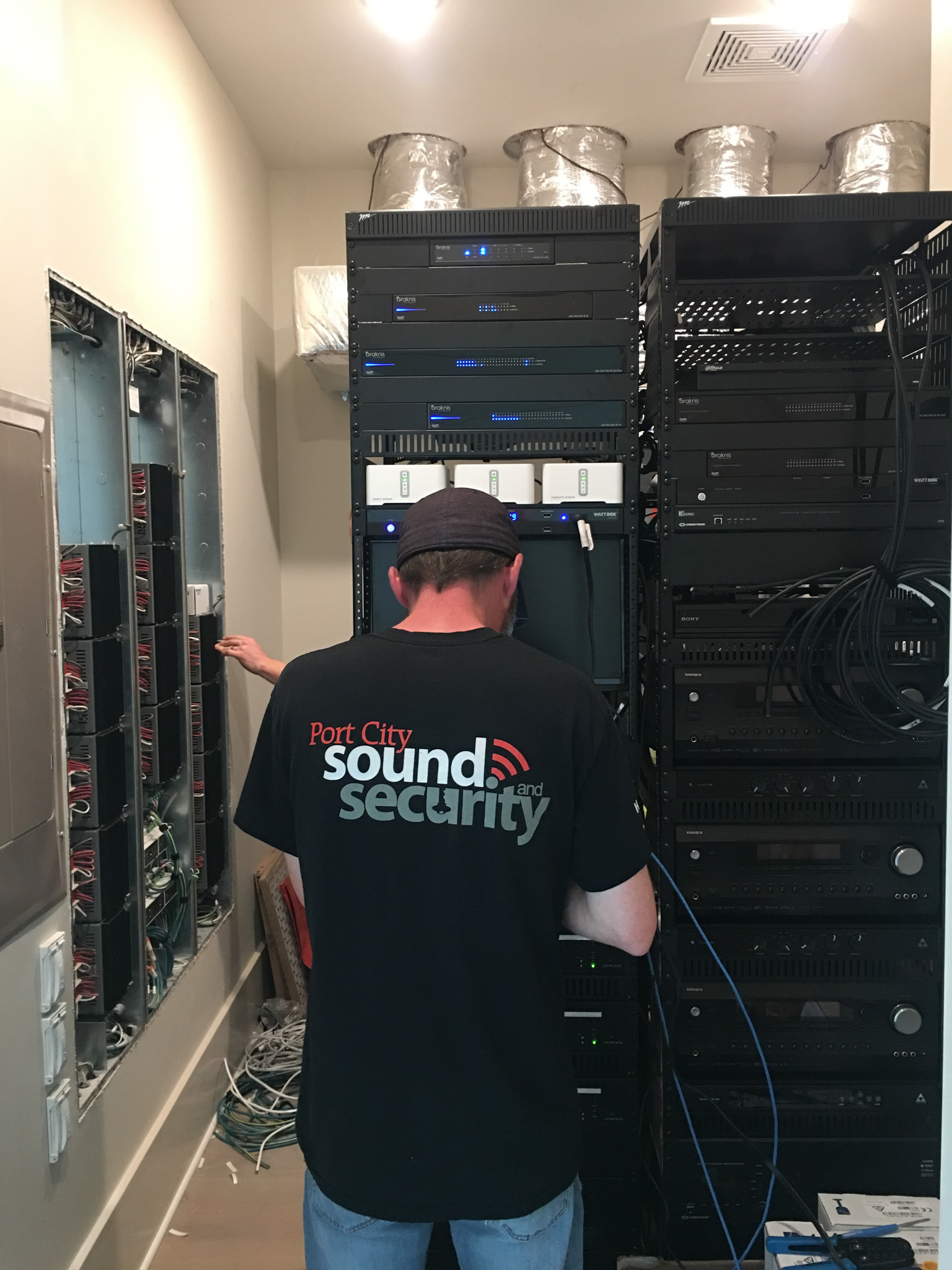
Structured cabling gives every device on your network its own dedicated connection, so a conference room camera and a lobby digital sign aren't competing for the same signal. That separation keeps performance stable as you add more devices each year.
Power over Ethernet takes this further, carrying both data and power over a single cable to access points and security cameras, which cuts down on separate electrical runs and simplifies future upgrades. When you move a device or add a new one, a wired backbone makes the change straightforward instead of triggering a full network overhaul. For a commercial integration project meant to last, that stability matters more than any wireless spec.
Fewer Disruptions, Stronger Business Continuity
Every dropped connection carries a cost. A missed security alert or a stalled transaction can add up fast in a commercial space that runs on uptime. A wired network reduces how often those disruptions happen in your building, since a physical connection isn't subject to the same interference or signal congestion that wireless depends on.
Redundant pathways can be built into your cabled network, too, so if one connection fails, traffic reroutes without anyone noticing. That kind of resilience is hard to replicate with wireless alone, especially when downtime affects more than one department.
Let's Build The Right Commercial Network
Every commercial integration project deserves a network that keeps up, not one that becomes the next bottleneck. Structured cabling gives your building the stability wireless can't provide on its own, especially when conference rooms and security systems can't afford a lag.
Port City Sound and Security designs and installs commercial networks built on that same principle, pairing a strong wired foundation with the wireless connections your team relies on every day. Contact our team here, and let’s talk through what your space needs.